Choosing the best Corrugated Roll manufacturer in China requires more than comparing prices or polished factory photographs. The real test appears on the production line: stable flute profiles, clean sheet surfaces, controlled temperature, and consistent performance after long operating hours. A reliable manufacturer should explain roll material, hardness, grinding tolerance, surface treatment, cooling design, and balancing results without hiding behind vague claims.
W. Edwards Deming, a respected manufacturing quality expert, said, “Quality comes not from inspection, but from the improvement of the production process.” His principle remains highly relevant to Corrugated Roll purchasing. A capable supplier should control every stage, from steel selection and heat treatment to final runout testing and packaging. Ask for measurable evidence. Request inspection reports, sample data, customer references, and service records. A beautiful brochure proves little.
The word “best” is slippery.
For one plant, the priority may be high-speed production. Another may need durable rolls for recycled paper and demanding board grades. China has many manufacturers, but their capabilities differ sharply. Some offer impressive specifications yet provide weak technical support after delivery. Others communicate slowly, but produce dependable rolls and solve problems carefully. That difference matters.
This guide evaluates manufacturers through practical criteria, not advertising language. It considers engineering experience, machining accuracy, material consistency, customization, delivery control, warranty terms, and after-sales response. The final choice should fit your machine, paper grades, production volume, and maintenance capacity. No supplier is perfect. That should be admitted early. Evidence, factory communication, and a controlled trial remain safer than choosing the lowest quotation.
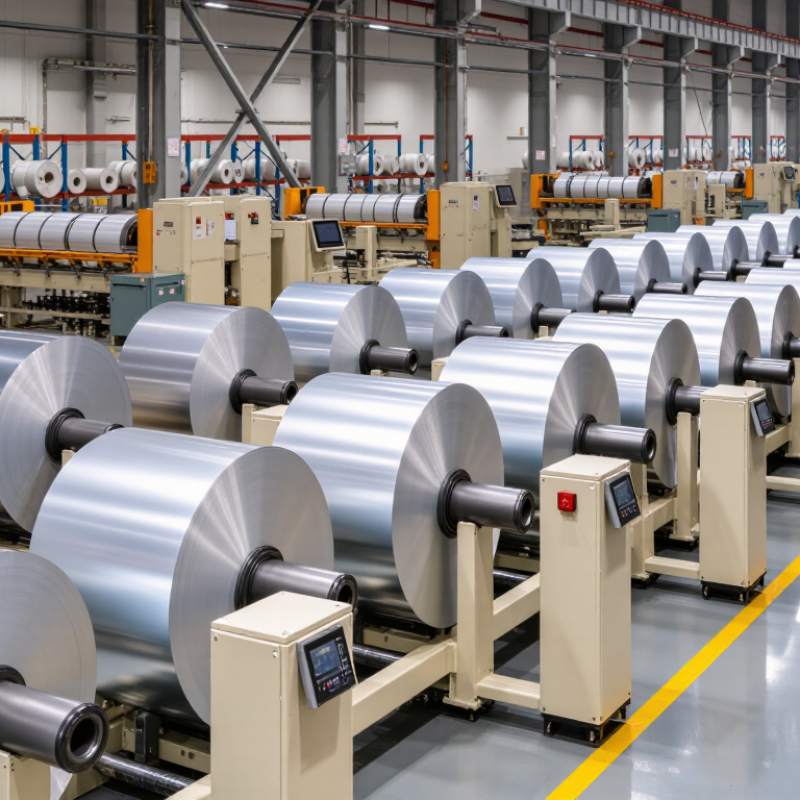
A corrugated roll is a precision roll set inside a corrugator. It shapes flat medium paper into flutes through heat, pressure, and controlled speed. Flute height, pitch, and bonding strength depend heavily on roll accuracy. A small runout error can create uneven board, vibration, and paper waste. The Fibre Box Association reported 355.5 billion square feet of corrugated products produced in the United States in 2023. At this production scale, roll reliability is not a minor purchasing detail.
Manufacturer quality matters because the roll must survive heat, pressure, abrasion, and continuous rotation. Important checks include steel hardness, flute geometry, surface coating, dynamic balancing, and thermal stability. The FEFCO European Database for Corrugated Board Recycling reported an 82.5% recycling rate for paper and board packaging in Europe. Stable rolls can support this goal by reducing rejected sheets and unnecessary trim. Less waste matters.
A practical warning: a polished surface does not prove long service life. I would ask for measured runout, flute inspection records, coating thickness, and test data under operating temperature. Some specifications look impressive but omit maintenance intervals. That is a weakness. A reliable Chinese manufacturer should explain tolerances clearly, provide traceable inspection reports, and accept reasonable technical questions before production. No supplier is perfect, but transparent evidence is more valuable than confident promises.

What Is the Best Corrugated Roll Manufacturer in China?
A reliable corrugated roll manufacturer must prove performance, not only present attractive samples. The roll material should resist wear, heat, pressure, and repeated production cycles. Experienced manufacturers select suitable alloy steel and apply controlled heat treatment. They should provide hardness records, dimensional reports, and surface inspection results.
Precision matters on a corrugator line. Small runout can create uneven flute pressure, vibration, and unstable board quality. A dependable supplier measures tooth profile, concentricity, shaft alignment, and surface finish. Dynamic balancing is also important for high-speed operation. Ask for inspection data from actual production rolls. A polished brochure is not enough.
Quality control should continue after machining. Reliable manufacturers use traceable material certificates, documented process checks, and final testing. A clear warranty should explain service limits and maintenance responsibilities. Technical support also matters when flute wear appears earlier than expected. I have found that practical questions reveal more than factory size. Can the supplier explain installation tolerances? Can engineers review operating temperature and line speed? Can they investigate a failed roll without avoiding difficult details?
Certificates help, but they do not replace evidence. Some suppliers may meet general quality standards while missing application-specific requirements. That difference deserves careful review. An honest manufacturer should admit possible limitations and suggest corrections. This is not weakness. It shows professional judgment. Production records, inspection photos, and customer references can make the evaluation more reliable.
| Evaluation Dimension | Relevant Standard or Reference | Recommended Verification Data | Why It Defines Reliability |
|---|---|---|---|
| Quality management system | ISO 9001:2015 | A valid, in-scope certificate covering design, machining, heat treatment, coating, inspection, and delivery control. | Demonstrates documented process control, corrective action, traceability, and continual improvement. |
| Environmental management | ISO 14001:2015 | Evidence of controlled coolant, grinding waste, coating chemicals, wastewater, and energy-related processes. | Helps verify that production follows a structured environmental management system. |
| Worker health and safety | ISO 45001:2018 | Documented risk controls for heavy rolls, grinding equipment, heat-treatment operations, and chemical handling. | Indicates that workplace risks are formally identified and managed. |
| Material traceability | ISO 9001 traceability principles; EN 10204 inspection documentation | Heat number, material certificate, supplier batch, heat-treatment record, and final inspection report linked to each roll. | Allows defects to be investigated and controlled from raw material through final delivery. |
| Dimensional tolerances | ISO 1101 for geometrical tolerancing; ISO 2768-1 where applicable | A drawing defining roll diameter, face length, journal dimensions, concentricity, runout, and datum references. | Clear tolerances reduce installation problems and help maintain stable nip pressure. |
| Radial runout and concentricity | Customer drawing and ISO 1101 geometric tolerancing principles | A documented runout measurement taken over the working face and verified at operating reference points. | Low runout supports uniform pressure, consistent flute formation, and reduced vibration. |
| Surface finish | ISO 21920 for surface texture specification | Measured roughness values, such as Ra or Rz, specified separately for flute surfaces, journals, and sealing areas. | Controlled surface texture improves paper contact, coating adhesion, sealing, and service consistency. |
| Flute geometry | Machine manufacturer’s approved flute profile and customer technical drawing | Verified flute type, pitch, depth, tip radius, pressure angle, lead, and flute count across the working width. | Accurate flute geometry affects board caliper, compression strength, paper consumption, and print quality. |
| Roll body and working width | Approved equipment drawing and application specification | Roll diameter, overall length, usable face length, journal size, bearing seats, and keyway or drive-interface details. | Exact dimensional compatibility is essential for safe installation and correct machine performance. |
| Base material quality | Material certificate and agreed metallurgical specification | Chemical composition, hardness, microstructure, ultrasonic inspection where specified, and heat-treatment results. | A sound substrate improves fatigue resistance, dimensional stability, and coating support. |
| Surface coating or treatment | Agreed coating specification; ISO 14923 may be used for thermal-spray coating evaluation | Coating composition, thickness, hardness, bond strength, porosity requirements, polishing allowance, and repair procedure. | Coating performance directly affects wear resistance, corrosion resistance, and roll service life. |
| Hardness verification | ISO 6507 for Vickers hardness; ISO 6508 for Rockwell hardness | Hardness test method, test location, calibration status, and results compared with the agreed technical specification. | Verified hardness helps predict wear behavior and confirms heat-treatment or coating consistency. |
| Non-destructive testing | ISO 17640 for ultrasonic testing; ISO 9934-1 for magnetic particle testing | Inspection method, acceptance criteria, calibrated equipment, qualified personnel, and retained test reports. | Helps identify subsurface flaws, cracks, or discontinuities before the roll enters service. |
| Balancing and vibration control | ISO 21940 series for rotor balancing | Specified balancing grade, rotational speed, correction method, residual unbalance, and balancing certificate. | Proper balancing reduces vibration, bearing loads, noise, and uneven board formation. |
| Quality inspection equipment | ISO 9001 monitoring and measuring resource requirements | Calibrated coordinate-measuring, roundness, roughness, hardness, runout, and coating-thickness equipment. | Reliable measurement capability is necessary for repeatable, objective acceptance decisions. |
| Factory acceptance testing | Customer-approved inspection and test plan | Signed dimensional report, flute-profile report, hardness report, runout result, balance report, and visual inspection record. | Provides objective evidence that the finished roll meets the purchase specification. |
| Application engineering support | Technical agreement based on machine data and operating conditions | Ability to review machine model, paper grades, production speed, steam conditions, pressure settings, and maintenance practices. | A technically matched roll generally performs more reliably than a product selected only by size or price. |
| Warranty and after-sales service | Written commercial and technical agreement | Defined warranty period, exclusions, response time, spare-part policy, troubleshooting process, and corrective-action procedure. | Clear post-delivery obligations reduce operational risk and simplify responsibility for defects. |
| Supplier evaluation score | Purchaser-defined quality and risk assessment | Suggested weighting: quality system 20%, technical capability 25%, inspection 20%, material traceability 15%, service 10%, delivery 10%. | A weighted score compares suppliers using measurable evidence instead of marketing claims alone. |
Note: Corrugated-roll dimensions, flute geometry, coating systems, tolerances, and service-life requirements should be confirmed against the specific corrugator model, operating speed, paper grades, and customer-approved technical drawing.
Comparing China’s corrugated roll manufacturers requires more than checking prices. The right supplier should understand flute geometry, steel selection, heat treatment, and daily corrugator pressure. A lower quote may hide shorter service life or unstable paperboard quality.
Request measurable production data from every manufacturer. Check roll runout, surface hardness, flute height, pitch accuracy, and dynamic balance. Ask for inspection records and sample test reports. Measure it. Reliable manufacturers should explain their tolerances clearly, not offer vague promises. Their engineers should also discuss roll specifications for your paper grades, machine speed, and heating system.
Factory experience matters during comparison. Review production equipment, grinding methods, coating control, and final inspection procedures. Ask how they handle worn rolls, repair requests, and delivery delays. Speak with comparable users when possible, but treat every reference carefully. A polished catalog proves little without traceable records. I would also inspect packaging design, because damaged roll surfaces can create problems before installation. One weakness remains: remote evaluations may miss small defects. An in-person audit costs more, yet it can reveal careless storage, inconsistent measurements, or poor process discipline. Reliable communication after delivery matters as much as manufacturing skill.
Choosing the best corrugated roll manufacturer in China requires more than comparing prices. Manufacturing depth and customization control often determine long-term performance.
Check whether the factory produces rolls for specific flute profiles, board grades, and machine speeds. A capable manufacturer should offer suitable steel grades, controlled heat treatment, CNC grinding, and dynamic balancing.
Ask for measured runout data, surface hardness records, and dimensional tolerances. These details reveal more than polished brochures. Small differences matter.
Customization should begin with a technical drawing, not a sales promise. The supplier should review roll diameter, working width, tooth pattern, coating needs, and installation conditions.
Request a sample drawing before production. Confirm how design changes are recorded and approved.
A reliable factory uses inspection tools at several stages, including incoming material checks and final balancing. Traceable inspection reports are useful when problems appear months later. They also show whether quality depends on one skilled worker.
Packaging and after-sales support deserve attention too. Heavy corrugated rolls need protected journals, moisture control, and stable crating.
Ask how replacement parts, repair guidance, and production feedback are handled.
No supplier is perfect. Some factories communicate well but document poorly, while others provide accurate reports but respond slowly. That trade-off deserves careful questioning.
A factory visit, video inspection, or independent dimensional check can expose gaps before payment and installation.
Choosing the best corrugated roll manufacturer starts with your production requirements, not a polished website. Define your paper grades, machine speed, flute profiles, roll diameter, and expected service life. A reliable supplier should discuss these details before offering a price. Ask about steel grade, surface treatment, balancing accuracy, runout tolerance, and grinding methods. These factors affect sheet quality, energy use, and downtime.
Experience matters on the factory floor. Request technical drawings, inspection records, and a sample quality report. If possible, inspect a finished roll under proper lighting. Look for smooth grinding, clean edges, consistent coating, and clear identification marks. Ask how the manufacturer handles wear, repairs, replacement parts, and urgent technical questions. A low quotation may hide weak after-sales support. I once underestimated delivery coordination. It caused more disruption than the roll’s purchase price.
Tips: Compare at least three qualified manufacturers. Check whether their equipment matches your roll size and accuracy needs. Confirm packaging, delivery terms, warranty limits, and inspection procedures in writing. Ask for references from similar corrugated production lines. Do not rely only on certifications. Useful evidence includes stable process records, trained technicians, and honest answers about possible defects. Some specifications may need adjustment after testing. That is normal. Your first order should include measurable acceptance criteria, such as runout, hardness, balance, and surface finish.
Practical evaluation weights for comparing corrugated roll manufacturers based on product performance, production capability, and service reliability.
Product quality and dimensional accuracy should receive the highest priority because they directly affect board consistency, machine stability, and waste levels. Wear resistance, material compatibility, delivery reliability, and technical support are also important when selecting a long-term manufacturing partner.